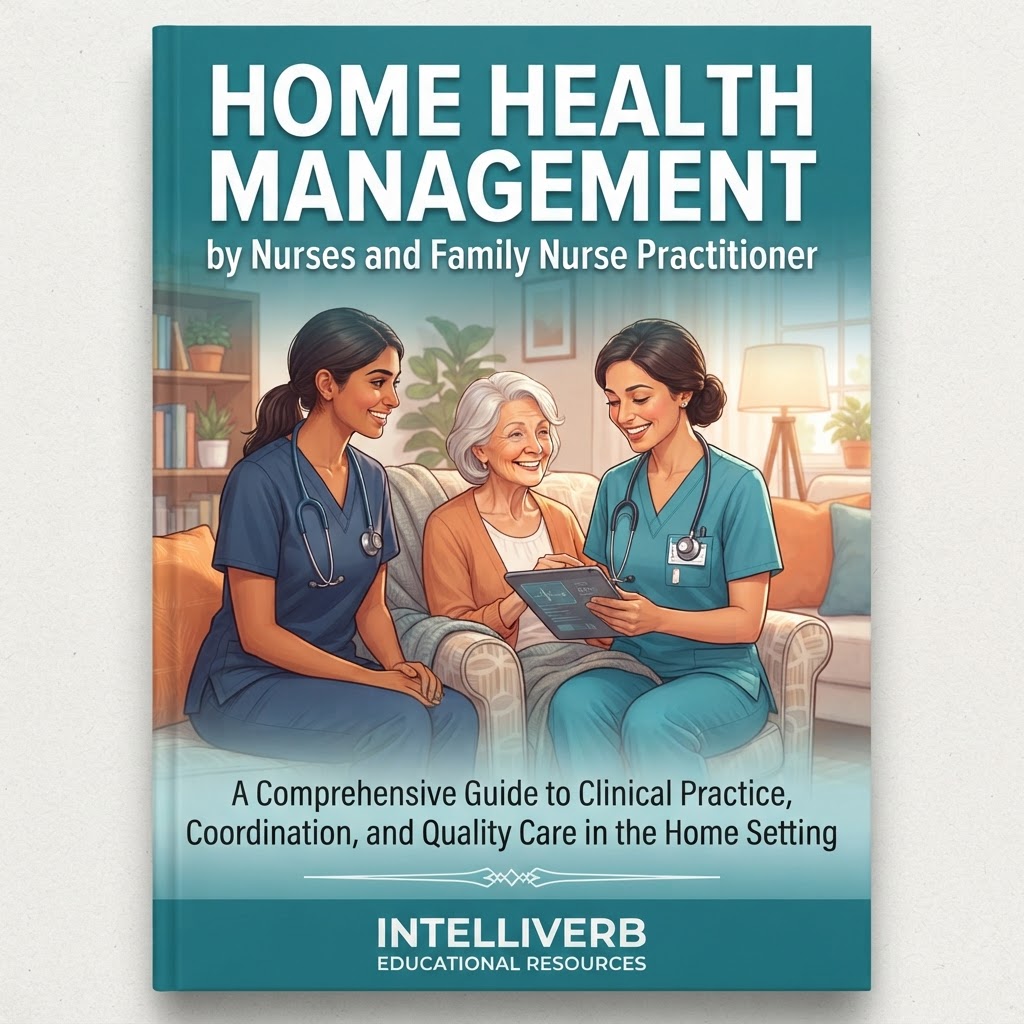
Home Health Management by Nurses and Family Nurse Practitioner
A Comprehensive Guide to Clinical Practice, Coordination, and Quality Care in the Home Setting
A comprehensive guide covering home health assessment, wound care, medication management, chronic disease management, infusion therapy, hospice care, caregiver education, and regulatory compliance for nurses and family nurse practitioners.
Chapters
Chapter 1: Introduction to Home Health Care Management
Overview of home health care, the nurse's and FNP's roles, regulatory framework, Medicare/Medicaid home health benefit, and care delivery models.
Chapter 2: Home Health Assessment and the Comprehensive Patient Evaluation
Initial and ongoing comprehensive assessment, OASIS documentation, home safety evaluation, functional and cognitive assessment tools.
Chapter 3: Wound Care Management in the Home Setting
Acute and chronic wound assessment, dressing selection, wound vac management, infection prevention, and documentation standards.
Chapter 4: Medication Management and Reconciliation
Medication reconciliation, polypharmacy, adverse drug reactions, patient education, and safe medication administration in the home.
Chapter 5: Managing Chronic Diseases in Home Health
Diabetes, CHF, COPD, hypertension management at home — monitoring, patient education, and coordinating with primary care providers.
Chapter 6: Post-Acute and Post-Surgical Care at Home
Post-hospitalization transitions, surgical wound care, fall prevention, rehabilitation coordination, and readmission prevention.
Chapter 7: Intravenous Therapy and Infusion Management
IV access, infusion therapy administration, TPN, antibiotics, chemotherapy, complication management, and patient/caregiver education.
Chapter 8: Palliative and Hospice Care in the Home
Palliative care principles, hospice eligibility, symptom management, advance directives, and supporting patients and families.
Chapter 9: Catheter and Ostomy Management
Urinary catheter care, colostomy/ileostomy management, percutaneous feeding tubes, skin care, and patient self-care education.
Chapter 10: Fall Prevention and Mobility Management
Fall risk assessment, environmental modifications, assistive devices, strength training, and mobility optimization strategies.
Chapter 11: Caregiver Education and Support
Teaching caregivers, caregiver burden, respite care, stress management, and building family capacity for home care.
Chapter 12: Infection Control and Prevention in Home Health
Hand hygiene, PPE use, isolation precautions, MDRO management, sharps disposal, and infection surveillance in the home.
Chapter 13: Documentation, Coding, and Reimbursement
OASIS-E, ICD-10 coding, PDGM payment model, documentation requirements, and quality reporting measures.
Chapter 14: Emergency Preparedness and Crisis Management
Recognizing emergencies, when to call 911, disaster planning, patient triage, and managing acute deterioration at home.
Chapter 15: Quality Improvement, Leadership, and the Future of Home Health
QAPI programs, performance improvement, leadership in home health, emerging technologies, and career advancement for nurses and FNPs.