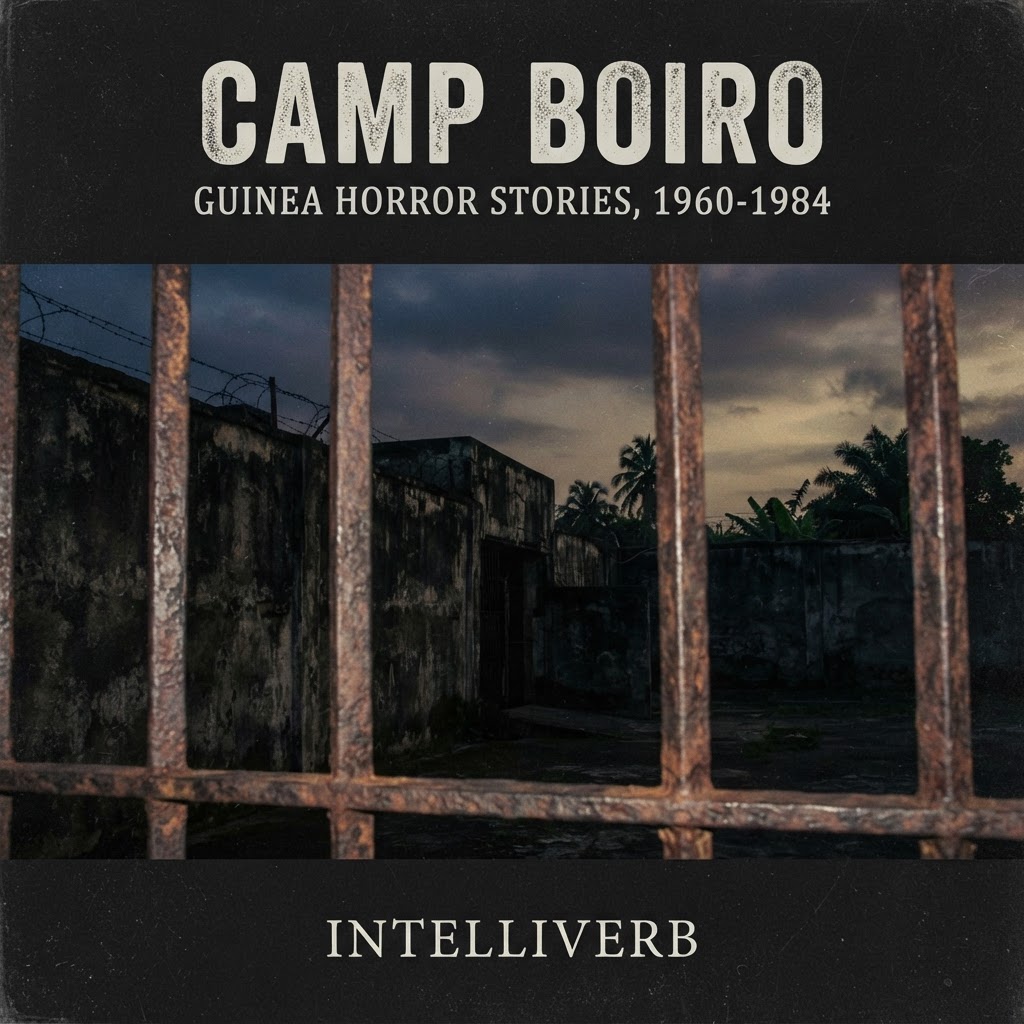
Camp Boiro: Guinea Horror Stories, 1960-1984
Detention, Denunciation, and Testimony Under Sékou Touré's First Republic
A documented history of Camp Boiro, the detention camp in Conakry where Guinea's first president imprisoned and killed real and imagined opponents between 1960 and 1984: the one-party state, the purge trials, the machinery of arrest and interrogation, the prisoners' own testimony, and the long afterlife of memory and justice.
Chapters
Chapter 1: Guinea at Independence: The Promise of 1958
The 1958 referendum, Guinea's solitary 'No' to de Gaulle, the departure of French administrators, and the hopes Sékou Touré's new republic carried into independence.
Chapter 2: The Making of a One-Party State
How the Parti Démocratique de Guinée absorbed rivals, the 1960-1961 consolidation of power, the role of the party committee, and the closing of political space.
Chapter 3: The Teachers' Plot of 1961 and the Birth of the Camp
The first great purge, the arrest of teachers and unionists, the first wave of detention, and how Camp Boiro came to be used as the state's instrument of internal control.
Chapter 4: The Place: Location, Layout, and the Names It Was Given
The site near Conakry, the physical structure of the camp, its changing official labels, and the name 'Camp Boiro' that prisoners and Guineans gave it.
Chapter 5: The Machinery of Arrest
Who could be taken, how warrants and denunciations worked, the role of the militia, and the journey from home or office to the interrogation block.
Chapter 6: Interrogation: Methods, Rooms, and Testimony
The documented techniques of interrogation and coercion, the names prisoners gave to rooms and practices, and why testimony from survivors shaped what the world knows.
Chapter 7: The Permanent Plot: Invented Conspiracies and Forced Confessions
The doctrine of the 'permanent plot' against Sékou Touré, how confessions were staged for radio and trial, and what that propaganda machinery was meant to achieve.
Chapter 8: Diallo Telli: The Diplomat Who Died Inside
The career of Diallo Telli, first secretary-general of the OAU, his arrest in 1976, and a case that became the defining symbol of the camp.
Chapter 9: The 1970 Invasion and the Purge That Followed
Operation Green Sea, the Portuguese-backed landing in November 1970, the mass arrests and executions that followed, and how the regime used the attack to settle accounts.
Chapter 10: Fodéba Keïta and the Purge of the Artists
The arrest of the musician and government minister Fodéba Keïta, the targeting of educated and international-facing Guineans, and the silencing of the country's cultural elite.
Chapter 11: Prisoners' Daily Life: Rations, Cells, and Rules
What prisoners describe of food, water, sleep, space, work, and the unwritten rules of survival inside the camp's blocks.
Chapter 12: Women and Families Behind the Walls
The arrest of women prisoners, the search for missing husbands and fathers, and how families lived with disappearance, silence, and social suspicion.
Chapter 13: Sickness, Hunger, and Death
Illness without treatment, the 'black diet,' mortality and burials, and how death inside the camp was recorded, denied, or reported to relatives.
Chapter 14: The Voices That Escaped: Memoir and Testimony
The prison memoirs and interviews that brought Camp Boiro to international attention, how survivors wrote against official silence, and how their accounts agree and differ.
Chapter 15: An Economy of Fear: Confiscation, Careers, and Complicity
Seized property, loyalty as a career requirement, the incentives that kept the system running, and the grey zone between victim, informer, and functionary.
Chapter 16: 1984: The Death of Sékou Touré and the Opening of the Camps
The death of the president in March 1984, the military takeover, the release of survivors, and the first testimonies recorded in freedom.
Chapter 17: The Trial of 1985
The Conakry criminal trial over the camp's crimes, who testified, what the court established, and how the verdicts were received in Guinea and abroad.
Chapter 18: Memory and Silence: Remembering Camp Boiro Today
Commemorations, survivors' associations, official silence and revisionism, and the place of the camp in Guinean national memory today.
Chapter 19: Sources and Disputes: How Historians Reconstruct the Camp
Archives, memoirs, forensic testimony, and the debates over numbers, dates, and responsibility, plus the problems of writing a history that the state tried to erase.
Chapter 20: Lessons: Arbitrary Detention and the Duty of Memory
What Camp Boiro teaches about autocratic detention, human rights institutions, and the ethics of bearing witness in post-dictatorship societies.