Family Nurse Practitioner: A Comprehensive Primary Care Guide
Chapter 1 of 15 • 35m
Chapter 1: Foundations of the Family Nurse Practitioner Role
History and evolution of the FNP role, scope of practice, core competencies, regulatory frameworks, and the FNP's position within the interdisciplinary primary care team.
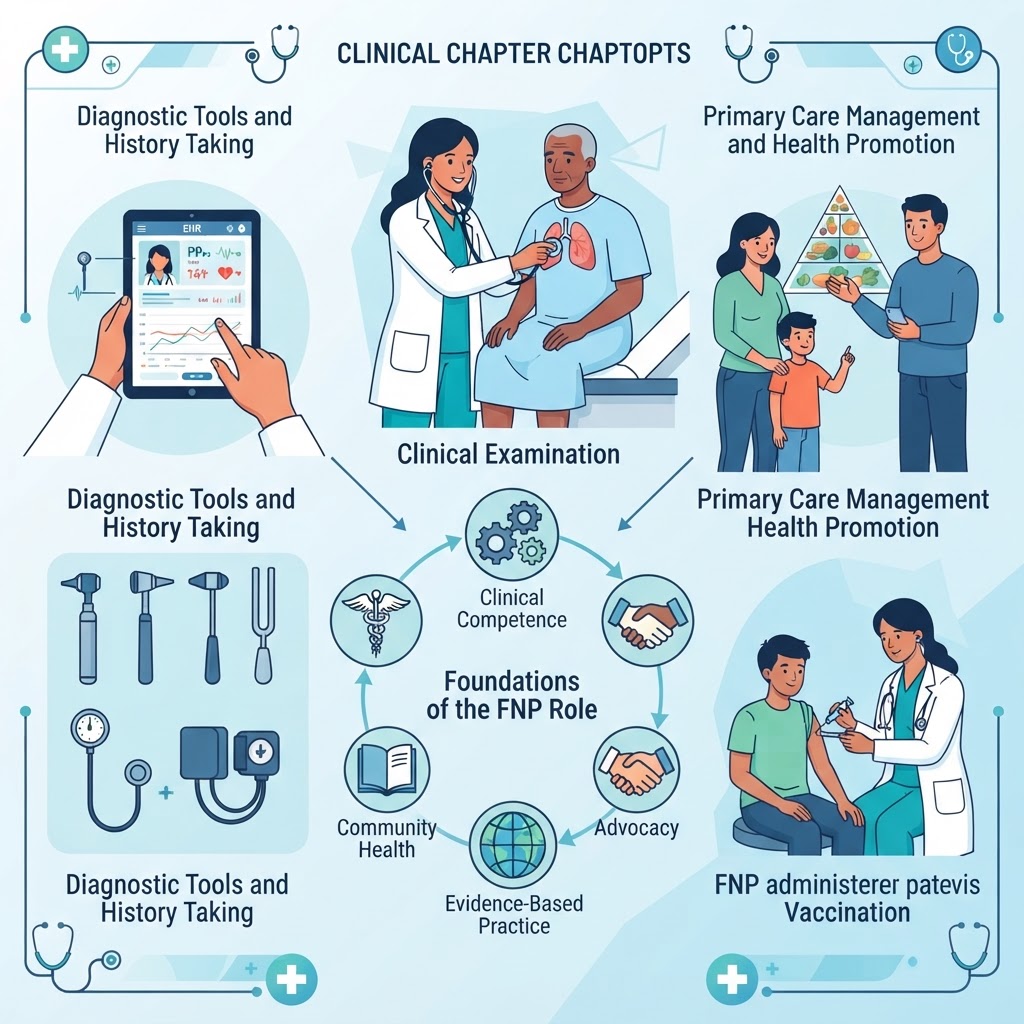
Chapter 1: Foundations of the Family Nurse Practitioner Role
Introduction
The Family Nurse Practitioner (FNP) is the cornerstone of modern primary care in the United States and globally. As advanced practice registered nurses (APRNs), FNPs bridge the gap between nursing philosophy—which prioritizes holistic, patient-centered care—and the clinical rigor of medical diagnostics and therapeutics. This chapter explores the evolution of the FNP role, the regulatory landscape governing practice, and the core competencies required to provide high-quality, evidence-based care across the lifespan.
Evolution of the FNP Role
The FNP role emerged in the mid-1960s at the University of Colorado, pioneered by Loretta Ford and Henry Silver. In response to a shortage of primary care physicians and a rising demand for accessible health services, the role was designed to provide comprehensive care to families in underserved areas. Over the past six decades, the role has evolved from a niche position to a primary driver of the healthcare delivery system. Today, FNPs are recognized for their ability to manage acute, chronic, and preventative health needs, significantly expanding access to care.
Scope of Practice and Regulatory Frameworks
The scope of practice for an FNP is legally defined by state nurse practice acts. While the clinical foundation is consistent, regulatory environments vary by state:
- Full Practice Authority: FNPs evaluate, diagnose, order/interpret diagnostic tests, and manage treatments, including prescribing medications, without mandatory physician oversight.
- Reduced Practice Authority: FNPs require a collaborative agreement with a physician for certain aspects of practice, particularly prescribing controlled substances.
- Restricted Practice Authority: FNPs require career-long supervision or team-based management by a physician.
Clinical Pearl: FNPs must stay current with their state’s Board of Nursing regulations and the National Consensus Model for APRN Regulation to ensure their practice remains within legal boundaries.
Core Competencies in Primary Care
To be effective, the FNP must master several core domains:
- Health Promotion and Disease Prevention: Implementing evidence-based screening (e.g., USPSTF guidelines).
- Comprehensive Assessment: Integrating physical, psychosocial, and environmental data.
- Clinical Reasoning: Utilizing diagnostic algorithms to refine differential diagnoses.
- Interdisciplinary Collaboration: Serving as an advocate and coordinator within the care team.
The FNP in the Interdisciplinary Team
The FNP functions as a primary provider and a care coordinator. In a patient-centered medical home (PCMH) model, the FNP collaborates with pharmacists, social workers, physical therapists, and specialists.
Best Practice: Effective interdisciplinary communication relies on the use of SBAR (Situation, Background, Assessment, Recommendation) and standardized electronic health record (EHR) notes to ensure continuity of care across the continuum.
Clinical Application: Assessment to Management
Assessment and Differential Diagnosis
The FNP’s primary strength is the clinical interview—extracting the "story" behind the symptom.
- Subjective Data: Elicit a thorough history using the OLDCARTS (Onset, Location, Duration, Character, Aggravating/Alleviating factors, Radiation, Timing, Severity) mnemonic.
- Objective Data: Perform a targeted physical exam based on the initial hypothesis.
- Differential Diagnosis: Construct a list of top three to five possibilities, considering "must-not-miss" diagnoses (e.g., ruling out cardiac causes for epigastric pain).
Diagnostic Workup and Management
Once the assessment is complete, the FNP determines the diagnostic path. This should be high-value: Do not order a test unless the result will change the management plan.
Case Scenario: The Adult with Fatigue
- Assessment: A 45-year-old female presents with a three-month history of fatigue.
- Differential Diagnosis: Hypothyroidism, iron-deficiency anemia, depression, or sleep apnea.
- Diagnostic Workup: Order a CBC, TSH, and potentially a ferritin level. Screen with the PHQ-9 for depression.
- Management: If TSH is elevated, initiate levothyroxine. If the patient is depressed, offer counseling or SSRIs. If results are normal, re-evaluate sleep hygiene and lifestyle factors.
Practical Examples and Clinical Pearls
Integrating Evidence-Based Practice (EBP)
FNPs should utilize resources such as UpToDate, dynamed, and clinical practice guidelines from the American Academy of Family Physicians (AAFP).
- Clinical Pearl: Always check the Choosing Wisely recommendations for the specific demographic you are treating to avoid over-utilization of imaging, such as unnecessary lumbar spine MRIs for uncomplicated lower back pain.
Case Scenario: Hypertension Management
- Assessment: Patient presents with a 150/95 mmHg reading.
- Management: First, rule out "white coat" hypertension by reviewing home logs. Second, assess for end-organ damage (creatinine, urinalysis, ECG). Third, initiate lifestyle modification (DASH diet, exercise) alongside pharmacological therapy (e.g., ACE inhibitor or CCB).
- Best Practice: Always explain the why behind a medication. Patient adherence is directly tied to their understanding of the pathology.
The FNP's Role in Population Health
Beyond the individual encounter, FNPs act as stewards of population health. This involves:
- Analyzing EHR data to identify patients missing their annual wellness visits or vaccinations.
- Participating in quality improvement projects to reduce local health disparities.
- Advocating for policies that address social determinants of health (SDOH), such as food insecurity or lack of transportation.
Chapter Summary
The FNP role is a dynamic integration of advanced nursing science and primary care practice. Success in this role requires not only clinical expertise but also a strong grasp of regulatory mandates, the ability to operate effectively within interdisciplinary teams, and a commitment to evidence-based practice. By focusing on comprehensive assessment, strategic diagnostic workups, and collaborative management, FNPs serve as the backbone of the primary care delivery system.
Key Takeaways:
- Lifelong Learning: Practice guidelines evolve; utilize current, peer-reviewed clinical decision-support tools.
- Collaborate: You are never practicing alone. Leverage the expertise of pharmacists, consultants, and social workers.
- Advocate: Address the systemic factors (SDOH) that impact patient outcomes as much as you treat their clinical symptoms.
- Stay Compliant: Know your state’s scope of practice limitations inside and out to protect your license and your patients.
💡 Key Takeaways
- The FNP role bridges nursing philosophy with clinical medical practice to provide holistic, patient-centered care.
- FNPs were established in the mid-1960s to address primary care provider shortages and improve healthcare access.
- The role requires navigating a complex regulatory landscape while maintaining high standards of evidence-based practice.
- FNPs are expected to demonstrate core competencies that enable the provision of comprehensive care across the lifespan.
🧠 Sign in to take the chapter quiz