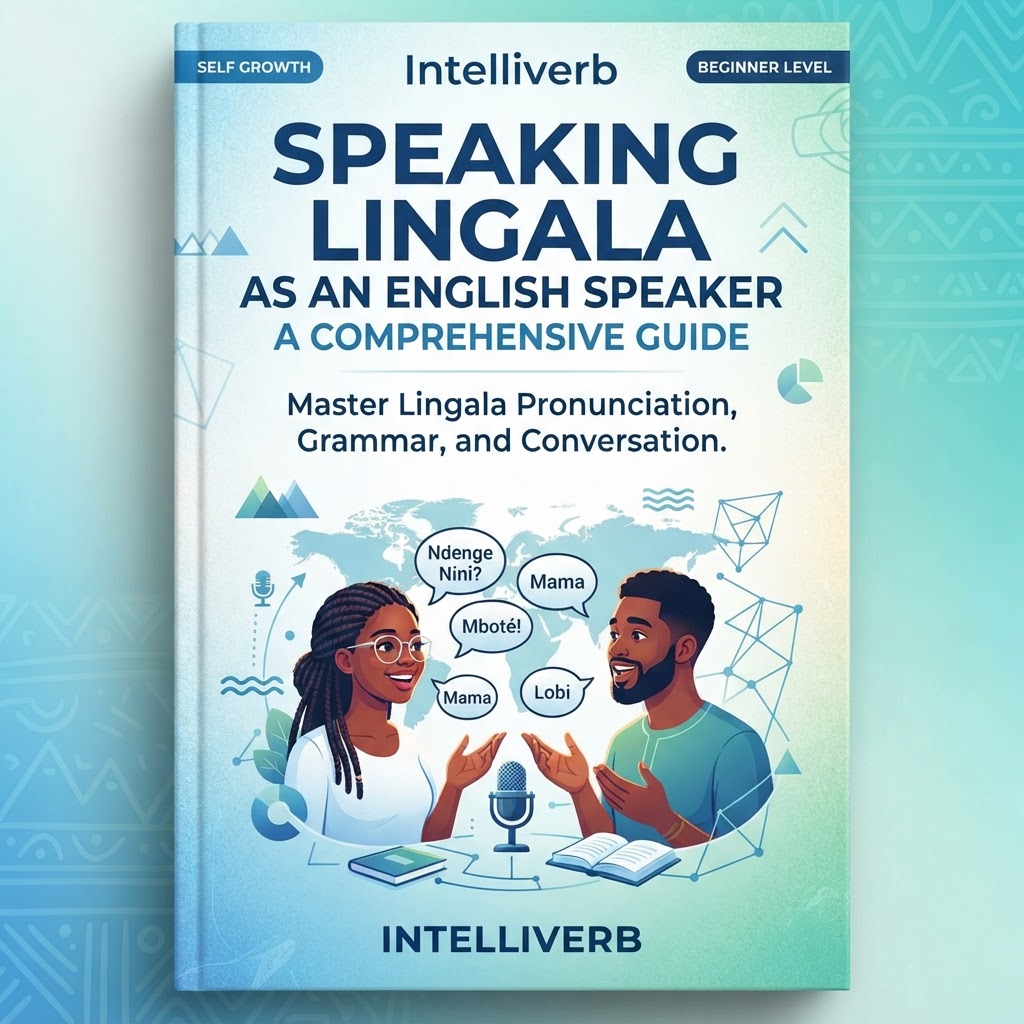
Speaking Lingala as an English Speaker: A Comprehensive Guide
Master Lingala Pronunciation, Grammar, and Conversation
A complete guide to learning Lingala for English speakers, covering pronunciation, grammar, vocabulary, conversation, culture, and practical strategies for fluency.
Chapters
Chapter 1: Introduction to Lingala for English Speakers
Overview of the Lingala language, its history, geographic reach in Central Africa, dialectal variations, and how to set effective learning goals.
Chapter 2: Lingala Pronunciation and Phonetics
Vowels, consonants, tonal patterns, nasal sounds, stress, intonation, and common pronunciation challenges for English speakers.
Chapter 3: Building Your Lingala Vocabulary
Core vocabulary, borrowed words, word families, thematic vocabulary lists, and strategies for retention.
Chapter 4: Essential Lingala Grammar — Nouns, Articles, and Gender
Noun classes, agreement rules, possessives, demonstratives, and pluralization in Lingala.
Chapter 5: Verbs and Conjugation — Present Tense
Regular and irregular verbs, subject prefixes, tense markers, and everyday present-tense usage.
Chapter 6: Past Tenses and Aspect
Forming and distinguishing past tenses, aspect markers, irregular past forms, and choosing the right past tense.
Chapter 7: Future and Conditional Tenses
The future tense, conditional mood, expressing probability and hypotheticals, and common future constructions.
Chapter 8: The Subjunctive and Imperative Moods
When and how to use the subjunctive and imperative, command forms, negation, and common expressions that require them.
Chapter 9: Pronouns and Sentence Structure
Subject, object, possessive, and demonstrative pronouns, word order, direct and indirect objects, and sentence patterns.
Chapter 10: Adjectives, Adverbs, and Comparisons
Adjective agreement, placement, comparative and superlative forms, adverbs, and common descriptive expressions.
Chapter 11: Prepositions and Conjunctions
Common prepositions, locative expressions, conjunctions, and how to link clauses in Lingala.
Chapter 12: Everyday Conversation and Practical Phrases
Greetings, introductions, asking for directions, shopping, making appointments, and common idiomatic expressions.
Chapter 13: Lingala in Context — Culture, Idioms, and Slang
Cultural context, idiomatic expressions, regional slang, proverbs, and how language reflects Congolese culture.
Chapter 14: Reading, Writing, and Listening Skills
Strategies for improving reading comprehension, writing practice, listening to native speakers, and using media for immersion.
Chapter 15: Fluency, Practice, and Continuing Your Lingala Journey
Language learning strategies, maintaining motivation, finding conversation partners, and resources for ongoing study.