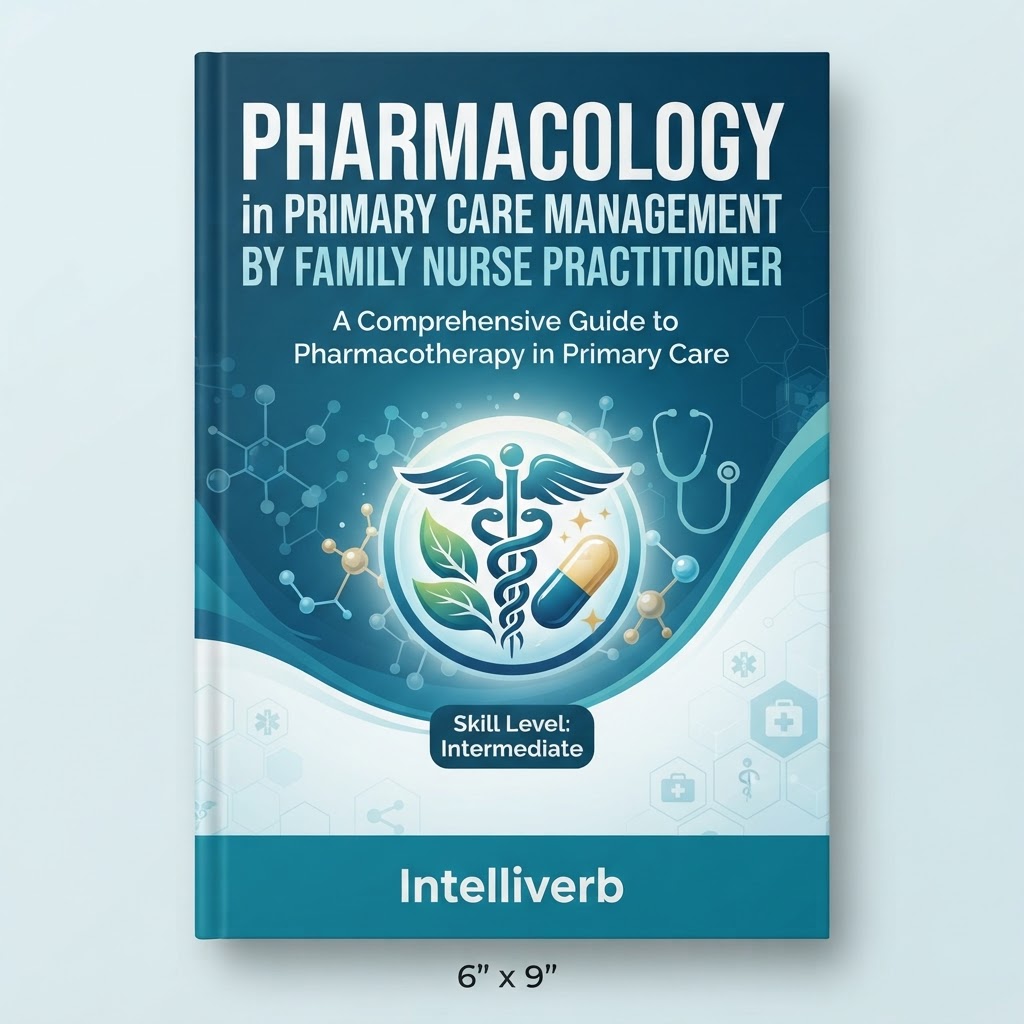
Pharmacology in Primary Care Management by Family Nurse Practitioner
A Comprehensive Guide to Pharmacotherapy in Primary Care
A comprehensive pharmacology guide for Family Nurse Practitioners covering pharmacokinetics, antimicrobial therapy, cardiovascular and diabetes pharmacotherapy, pain management, psychiatric medications, and safe prescribing practices across the lifespan in primary care.
Chapters
Chapter 1: Introduction to Pharmacology in Primary Care
Overview of pharmacology principles for the FNP, pharmacokinetics, pharmacodynamics, the prescribing process, legal and ethical considerations, and medication safety in primary care.
Chapter 2: Pharmacokinetics and Pharmacodynamics in Clinical Practice
Absorption, distribution, metabolism, excretion, drug-receptor interactions, agonists vs antagonists, and applying PK/PD principles to drug selection and dosing.
Chapter 3: Antimicrobial Therapy in Primary Care
Antibiotic selection for common infections, stewardship, penicillins, cephalosporins, macrolides, fluoroquinolones, antivirals, antifungals, and managing resistant organisms.
Chapter 4: Cardiovascular Pharmacology: Antihypertensives and Lipid Management
ACE inhibitors, ARBs, beta-blockers, calcium channel blockers, diuretics, statins, ezetimibe, PCSK9 inhibitors, and managing hypertension and dyslipidemia.
Chapter 5: Diabetes Pharmacotherapy: Oral and Injectable Agents
Metformin, sulfonylureas, DPP-4 inhibitors, GLP-1 agonists, SGLT2 inhibitors, insulin therapy, and individualizing diabetes treatment in primary care.
Chapter 6: Respiratory Pharmacology: Asthma and COPD Management
Short-acting and long-acting bronchodilators, inhaled corticosteroids, leukotriene modifiers, biologics, and stepwise asthma and COPD management.
Chapter 7: Gastrointestinal Pharmacology: PPIs, Antacids, and IBS Agents
Proton pump inhibitors, H2 blockers, antacids, prokinetics, antispasmodics, laxatives, anti-diarrheals, and managing GERD, PUD, and IBS.
Chapter 8: Pain Management Pharmacology: Analgesics and Anti-inflammatory Agents
Acetaminophen, NSAIDs, opioids, adjuvant analgesics, topical agents, chronic pain management, and opioid stewardship in primary care.
Chapter 9: Psychiatric Pharmacology: Antidepressants, Anxiolytics, and Antipsychotics
SSRIs, SNRIs, benzodiazepines, buspirone, atypical antipsychotics, mood stabilizers, and managing depression, anxiety, and bipolar disorder in primary care.
Chapter 10: Women's Health Pharmacology: Contraception and Hormone Therapy
Combined oral contraceptives, progestin-only methods, IUDs, emergency contraception, hormone replacement therapy, and managing menopausal symptoms.
Chapter 11: Thyroid and Endocrine Pharmacology
Levothyroxine, antithyroid medications, glucocorticoids, and managing hypothyroidism, hyperthyroidism, and adrenal disorders in primary care.
Chapter 12: Geriatric Pharmacology and Polypharmacy Management
Beers criteria, drug-drug interactions, dose adjustments for renal/hepatic impairment, deprescribing, and safe medication management in older adults.
Chapter 13: Pediatric Pharmacology: Dosing and Medication Safety in Children
Weight-based dosing, common pediatric medications, off-label prescribing, liquid formulations, and medication safety considerations in pediatric primary care.
Chapter 14: Drug Interactions, Adverse Effects, and Medication Reconciliation
CYP450 enzyme system, common drug interactions, adverse drug reaction reporting, medication reconciliation, and patient education strategies.
Chapter 15: Putting It All Together: Clinical Case Studies and Pharmacotherapy Best Practices
Integrating pharmacology with clinical decision-making, case-based learning, evidence-based prescribing, and medication management best practices for FNPs.