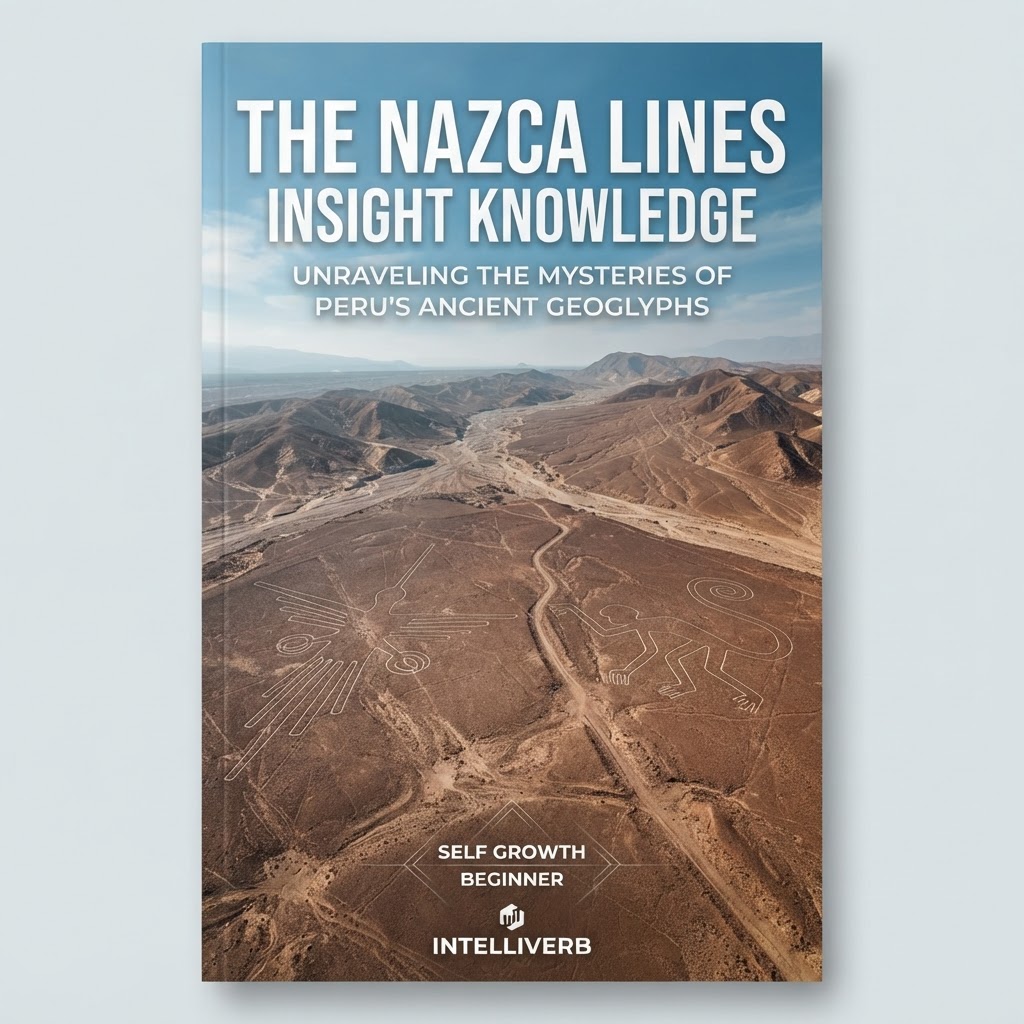
The NAZCA Lines: Insight Knowledge
Unraveling the Mysteries of Peru's Ancient Geoglyphs
A comprehensive exploration of the Nazca Lines covering their discovery, construction techniques, the Nazca civilization, biomorphs and geometric figures, astronomical theories, water rituals, modern discoveries, preservation challenges, and enduring legacy.
Chapters
Chapter 1: Discovery and Early Exploration of the Nazca Lines
The accidental discovery of the Nazca Lines from the air, early explorers like Toribio Mejía Xesspe and Paul Kosok, and the pioneering aerial photography that revealed the geoglyphs.
Chapter 2: The Geoglyphs of the Nazca and Palpa Deserts
Geographic setting, desert environment, types of geoglyphs (biomorphs and geometrical figures), and the unique climatic conditions that preserved them for centuries.
Chapter 3: The Nazca Civilization and Culture
The Nazca people, their society, agricultural practices, ceramics, textiles, religious beliefs, and how their culture shaped the creation of the lines.
Chapter 4: Construction Techniques and Engineering
How the Nazca constructed the lines using simple tools, surveying methods, removal of dark surface stones to reveal lighter soil, and the geometric precision achieved.
Chapter 5: The Biomorphs — Animals, Plants, and Human Figures
Detailed examination of the animal, plant, and human geoglyphs including the hummingbird, spider, monkey, condor, whale, and astronaut figure.
Chapter 6: The Geometric Figures — Lines, Trapezoids, and Spirals
The straight lines, triangles, trapezoids, and spirals that make up the majority of the geoglyphs, their dimensions, and their geometric sophistication.
Chapter 7: Maria Reiche and Decades of Dedication
The life and work of Maria Reiche, the mathematician who devoted over 50 years to studying and protecting the Nazca Lines, mapping each figure meticulously.
Chapter 8: Astronomical and Calendar Theories
The theory that the lines served as an astronomical calendar, alignments with solstices and stars, and the ongoing debate about their celestial purpose.
Chapter 9: Water, Ritual, and Religion
Theories connecting the lines to water cults, religious ceremonies, pilgrimages, and the spiritual significance of water in an arid environment.
Chapter 10: Irrigation, Agriculture, and Water Management
How the lines may have related to underground aqueducts (puquios), water flow management, and agricultural sustainability in the Nazca region.
Chapter 11: Modern Technology and New Discoveries
Satellite imagery, AI-assisted mapping, drone surveys, and how modern technology has revealed hundreds of previously unknown geoglyphs in recent years.
Chapter 12: Environmental Threats and Preservation
Climate change, erosion, tourism impact, illegal encroachment, and the conservation efforts to protect this UNESCO World Heritage Site.
Chapter 13: Controversial Theories and Alternative Explanations
Examination of fringe theories including extraterrestrial landing strips, ancient airfields, and why mainstream archaeology rejects these claims.
Chapter 14: The Nazca Lines in Popular Culture and Global Imagination
The lines in literature, film, documentaries, video games, tourism, and their enduring mystique in global consciousness.
Chapter 15: The Enduring Legacy of the Nazca Lines
The lasting significance of the Nazca Lines, lessons for modern civilization, the importance of cultural preservation, and the ongoing quest to understand them.